Commercial Roll-Up Door Springs
Lee's Summit Facilities
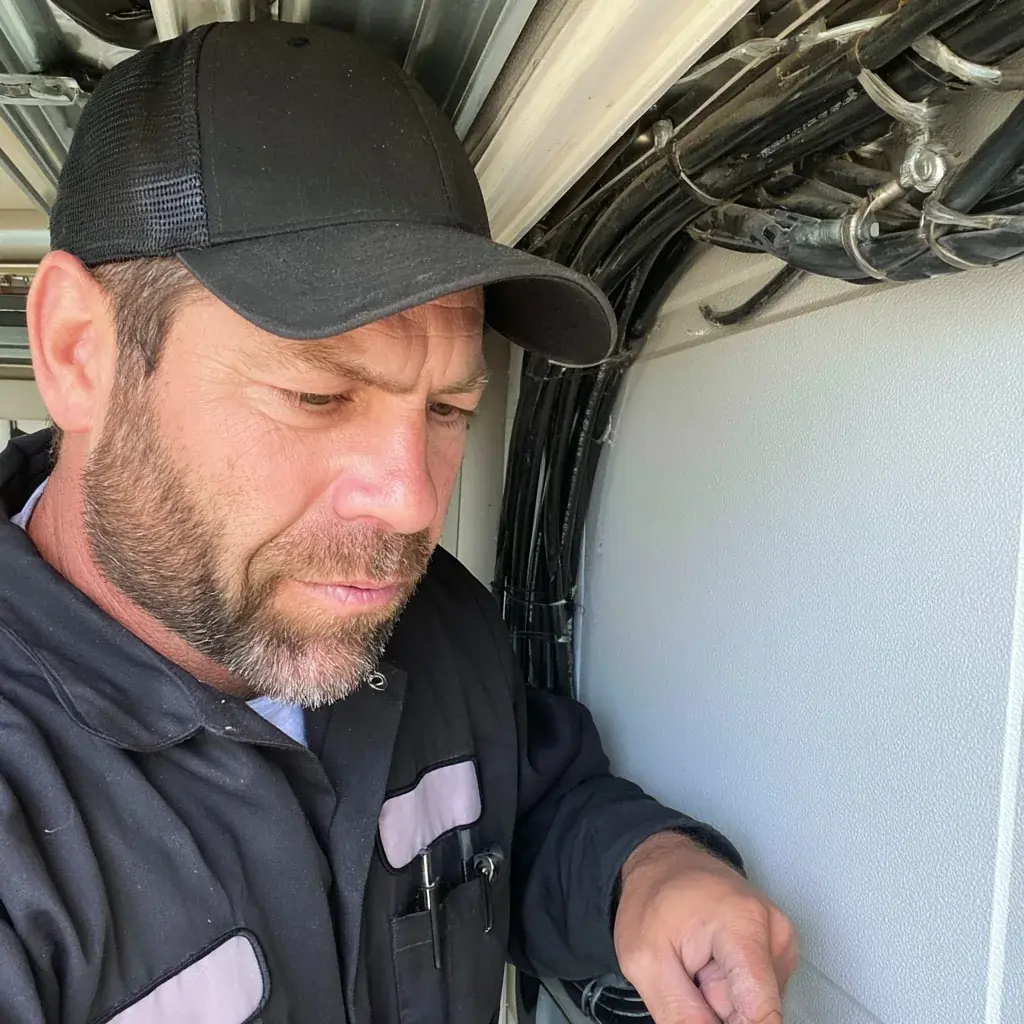
Door-level records give Lee's Summit property managers a consistent way to follow spring work across multiple properties.
Send the pros we connect you with a site and door list, then request one written scope format for every opening. Match each work order, completion note, and invoice to its property and door ID to keep Lee's Summit portfolio records consistent.
The cost of commercial spring repair depends on the door and spring assembly, parts needed, site access, and the work you authorize. Across a Lee's Summit portfolio, separate calls can leave you matching notes and bills after the fact. A shared written scope gives each request the same basic structure: identify the opening, describe the issue, record the approved work, and close with findings. That paper trail helps you see what was done at each property without asking staff to reconstruct every visit.
A consistent record starts with the same naming rules at every site. Give each property a short identifier and each opening its own label, then use those labels in requests, technician notes, and accounting records. For a Lee's Summit portfolio, staff might reference Legacy Park or Harris Park as local orientation while retaining the actual property and door identifiers in the work order. The landmark is context; the label tells the pros we connect you with which opening needs attention.
A single invoice shape lets you review spring work across multiple properties without translating different formats. Ask that each bill show the site, opening, approved scope, labor, parts, tax, and any authorized change as separate items. In Lee's Summit, that structure can help accounting match a charge to its work order and the technician's findings. It also makes an incomplete record easier to spot, such as a listed part with no note showing which door received it.
Build a door list around information that helps identify the spring assembly when service is needed. Record the opening label, door type, spring arrangement if known, and any identifying details available from prior service paperwork. A torsion spring is coiled around a shaft above the opening and helps lift as it unwinds; extension springs stretch beside the horizontal tracks. Do not guess at a configuration from the building address. In Lee's Summit, a useful register makes each request traceable even when staff change.
Record access constraints and operating periods separately from the spring description. A scheduled service window may need to account for receiving hours, tenant activity, site rules, or a contact who can admit the technician. You can note preferred windows for Lee's Summit properties and update them when building use changes. That gives the scheduler practical context without turning the record into a maintenance contract or implying a promised arrival time.
| Site / opening | Spring work | Closeout notes |
|---|---|---|
| Site reference | Property code and opening ID | Example labels: Martin City, Smith Lake area |
| Door identifier | Building and door tag | Separates nearby openings |
| Spring assembly | Torsion, extension, or enclosed | Helps confirm matching parts |
| Door demand | Typical daily opening pattern | Puts duty needs in context |
| Operating effect | Blocked, limited, or usable | Shows the effect on work |
| Scope basis | Spring and related findings | Makes proposed work comparable |
| Access window | Tenant hours and site limits | Supports scheduled service planning |
| Invoice grouping | Property and work order IDs | Simplifies charge review |
Write each work order for one opening, even when you submit several requests together. Include the property identifier, door label, what staff observed, access instructions, and who can approve added work. A door that moves unevenly or will not lift should be described plainly; staff should not force it to operate. For Lee's Summit sites, a precise ticket keeps the reported symptom attached to the right asset and gives the pros we connect you with a clear starting point.
When work is complete, the technician's notes should identify the spring found, the parts changed, and the door's operation afterward. If cables or drums show wear, document that condition against the same opening so the next service request has context. Keep the finding factual: a spring's wire gauge, inside diameter, and length affect its lifting capacity, but the record should reflect what was actually identified. Lee's Summit staff can then review the repair without relying on a verbal handoff.
Use the same invoice fields and order for each property, then make the work order reference visible on the bill. Separate the approved repair from any additional work authorized later, and keep labor and parts legible as distinct entries. That repeatable format helps Lee's Summit accounting compare completed work and route charges to the right property. A clear paper trail also gives a manager a way to question a mismatch before it becomes part of a closed account.
Downtime is easier to assess when the record names the operation affected by the opening. Note whether a closed door holds up receiving, vehicle access, or work inside a service area, then coordinate a scheduled window around that impact. A location by Longview Lake may have different operating demands from another Lee's Summit property, so avoid copying the same urgency note onto every ticket. The detail helps you rank requests using building needs instead of incomplete descriptions.
If staff see a broken spring or a door that is out of level, keep people clear and stop using the opener. A torsion spring stores force in its coil, and spring hardware under tension can cause severe injury if handled incorrectly. The opener is designed to guide a balanced door, not lift its full weight alone. For a Lee's Summit work order, report what was observed and leave loaded spring parts to a professional.
A spring record can also capture related parts that may affect how the door moves. Lift cables wind around drums at the ends of the shaft, while rollers, hinges, and bearings guide the door along its tracks. Fraying, binding, or worn hardware can change the load on a spring and help explain why a repair needs more than a spring part. Ask that Lee's Summit findings distinguish observed conditions from work performed, so a note does not imply an unapproved repair.
For frequently used openings, cycle rating can help frame spring selection. One cycle means the door opens and closes once; the rating describes expected cycles rather than calendar years. Standard torsion springs are commonly rated near 10,000 cycles, while high-cycle options often start at 25,000 cycles and above. Actual selection depends on the door and its use. Keep the selected rating in the Lee's Summit service record so later comparisons have a documented basis.
To request commercial spring repair in Lee's Summit, send the property list, door labels, known spring details, access limits, approval rules, and preferred work windows. Include the format you want for work orders, completion notes, and invoices so the pros we connect you with can respond to a defined scope. If spring information is unknown, say so rather than estimating. The request can then establish a consistent record for the work performed at each property.
After service, file the approved scope, technician notes, parts, labor, and final invoice together under the property and opening identifiers. Add a photo or operating note when it clarifies what the technician found, and preserve changes to the record so later staff can follow the sequence. For Lee's Summit managers, consistent closeout paperwork makes it easier to answer the next practical question: what was replaced, what was observed, and which opening does the record describe?
Commercial spring repair cost changes with the door, spring assembly, and any related hardware work found at the opening. For a Lee's Summit portfolio, a record trail makes those differences visible: attach each request, approved scope, completion note, and charge to the same property and door identifier. If records also cover nearby Blue Springs, put the municipality and street address ahead of landmark shorthand such as Central Park or Railroad Lake. That structure helps you compare completed work and reconcile invoices without treating unlike openings as the same job.
Postal labels can help orient a household spring-service request, while the property's actual location decides whether that part of the county is reachable, includingPleasant Hill, Belton and Lee's Summit. Have the provider explain the visit cost, including any travel amount for an address outside its usual coverage area.
Describe any change in door movement to give the licensed pros we connect you with useful visit context. An account's estimate depends on the mix and dimensions of its doors, how many are included in the visit, and the frequency set for service; location notes such as Railroad Lake help identify the account.Note whether the spring is mounted above the opening or along the track to help describe the commercial door's setup. When calling, share the opening dimensions, use frequency, and door type. Name the site reference, such as Belvidere Park, and ask the pros we connect you with to list the proposed parts.Use pricing guide to review the cost bands; commercial overview lays out how a scheduled service program is arranged.
Lee's Summit Facilities
Lee's Summit Docks
Storage Unit Doors
Send the pros we connect you with a property list that gives each site address, door identifier, observed issue, and operating constraint. Ask them to return a written scope with the same headings for every opening. In Lee's Summit, that lets you review spring work by door and issue work orders from one organized request instead of rebuilding the details for each call.
File the approved scope, parts and labor detail, completion note, and invoice under the same property, opening ID, and work order. Note the spring system and parts installed so a later service request has a reliable starting point. Keep authorization for any added work with those records; that makes the final charge easier to trace across Lee's Summit sites.
Yes. Include each site's business hours, tenant activity, and periods when a door can be unavailable. The pros we connect you with can use those limits when proposing work windows, and you can confirm access with site staff before assigning the work order. For Lee's Summit locations, record the chosen window against the specific opening so the schedule is clear to everyone handling it.
The quote can separate the spring assembly, labor, and any related hardware or adjustment. Door size, spring system, and the condition of parts that carry the door's weight can change the scope. Ask the pros we connect you with to identify the opening and record any proposed added work for approval before it is included in the final invoice.
Send your Lee's Summit site list, door IDs, known issues, and operating limits to request a written scope from the pros we connect you with.
Call +18165865622