Count Each Door's Daily Work
Downtime and early spring replacement cost more than a calendar reminder, so base inspections on each door’s duty cycle. In Lee’s Summit, count daily open-and-close operations per door; a door used throughout a shift reaches its rated cycle total sooner than one used lightly. Set shorter inspection intervals as daily use rises, and have the pros we connect you with assess the spring, cables, drums, balance, and opener strain. Keep an inspection log to guide planned service. The same scheduling question applies near Butterfly Park, Legacy Park, and Longview Community Center. If a door bangs, tilts, or stalls, stop using it and arrange repair.
Keep the count separate for each opening, even when several doors look alike. Staff can tally full operating sequences during representative workdays, or a cycle counter can do it where available. Don't estimate from the building's busiest door and apply that figure to every spring. A site near Butterfly Park, for example, still needs records tied to its own door traffic; the landmark says nothing about spring workload.
Set Checks From Spring Capacity
A commercial schedule should also protect operating time. Keep an inspection log for doors in Lee's Summit, Grain Valley, and Lone Jack, with the date, cycle count, observed wear, and planned service window; that record helps you reserve downtime before a problem interrupts deliveries. If an assessment finds a frayed cable, worn drum, or binding travel, arrange repair rather than waiting for the next scheduled visit. Do not loosen brackets or adjust loaded spring hardware.
The comparison with a house is about use, not the door's appearance. A residential opening may sit idle for long stretches, while a loading door can cycle whenever a shift receives or dispatches goods. That repeated lifting and lowering works the spring each time. For a Lee's Summit operation near Legacy Park, set timing from actual door activity and its rating rather than borrowing a schedule from a nearby home or another opening.
What A Planned Visit Can Find
A planned visit can catch wear before a routine date becomes a missed warning. The pros we connect you with can assess the spring and the parts that share its load, including lift cables, drums, rollers, hinges, and bearings. Binding or worn hardware can make the spring work harder. Keep staff clear of spring, cable, and bottom-bracket hardware; these parts can be under dangerous tension and are not safe to adjust during a walk-through.
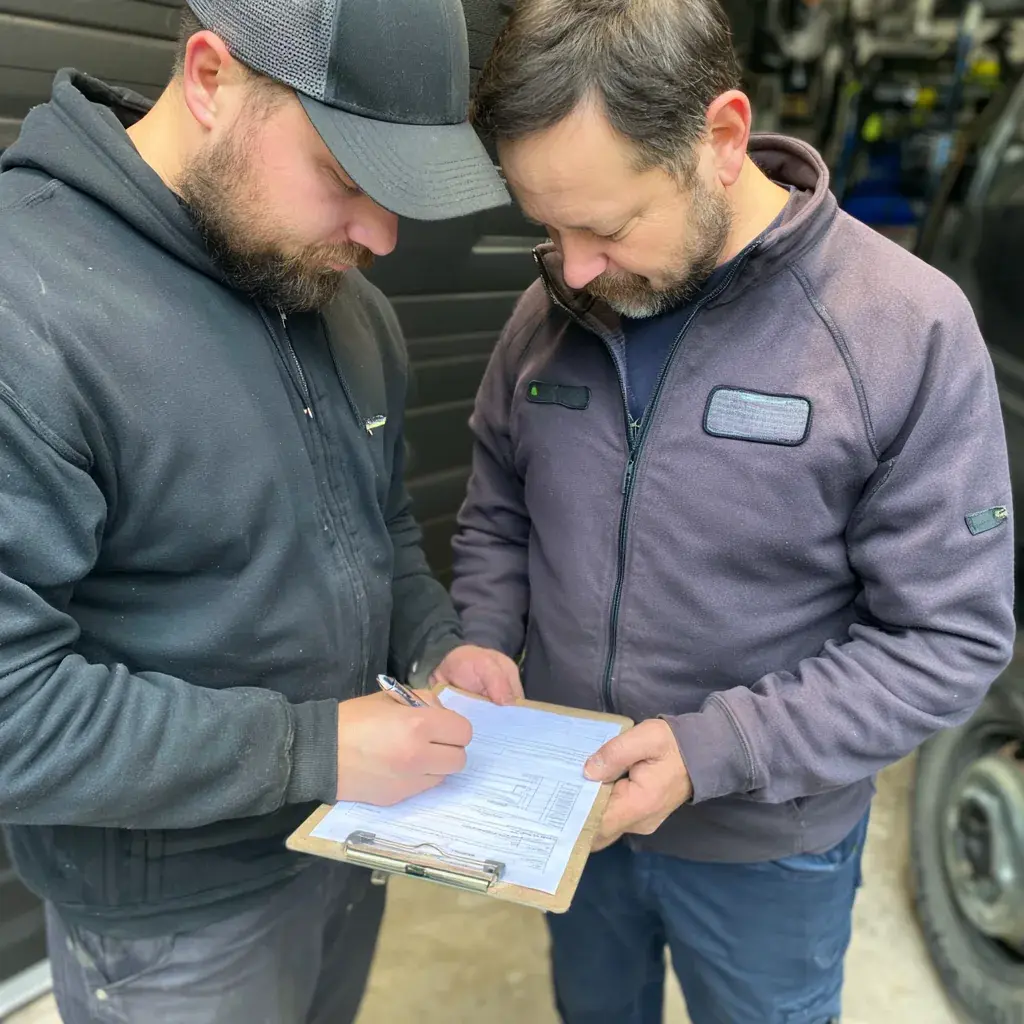
An inspection log helps make the next date less of a guess. For each opening, record the check date, estimated daily activity, spring rating if known, what was observed, and any work completed. Note shift or loading changes that could raise use, too. If your facility near Longview Lake has several doors, label each record clearly; a finding for one opening should not quietly become the history for another.
Know When The Schedule Must Change
A schedule is only useful while the door behaves as expected. Stop operating it and arrange an assessment if it starts moving unevenly, sags, stops partway, makes a sudden loud snap, or shows a separated spring or loose cable. A spring that cannot support the door properly may keep it from staying in place. A damaged or unbalanced door can place extra strain on the opener and create a hazard.
For a door with no change in movement, continue tracking its daily activity and use the log to choose an assessment date with the pros we connect you with. Plan downtime around a quieter operating window, and tell staff which opening will be unavailable. If a warning sign appears first, the schedule gives way to prompt assessment. The key question for your next review is whether each door's current traffic still matches the interval you set.
Dealing with this in your home?
Spring repair cost depends on the spring type and whether related lift hardware, such as cables or shaft drums, also needs attention; ask for the expected charge before scheduling. Note whether the door feels heavy, hangs unevenly, or stops partway so the licensed pros we connect you with can assess the problem. Ask them to confirm coverage, availability, timing, and any visit charge. Lee's Summit, Grandview, and Grain Valley are separate service areas, so a ZIP label alone may not establish your municipality or eligibility. Have the provider confirm the address and work scope before arranging a visit.